Built and automated sales teams in my own companies: a manufacturing business and an online school. Cut my own staff from 6 to 1. Now I build the same system for your business and personally run every project. More about me: dzamukov.com →
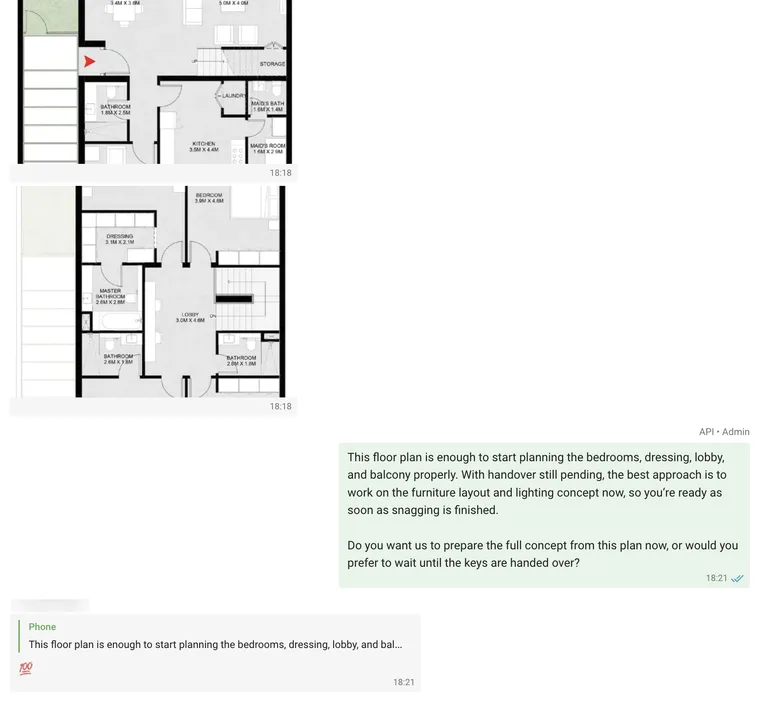
In a Dubai design studio it reads floor plans and quotes budget ranges.
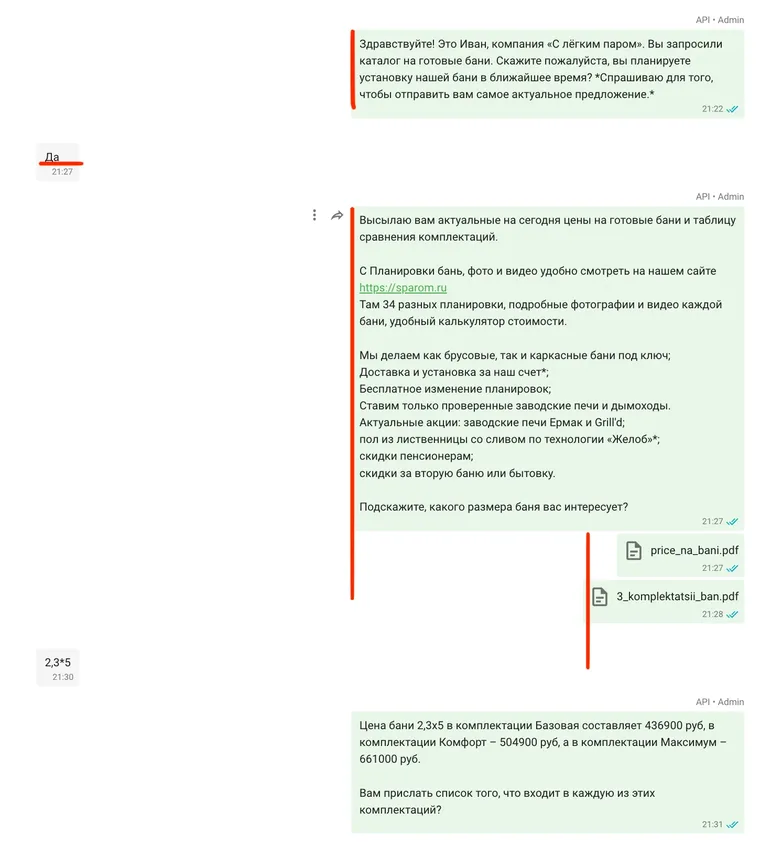
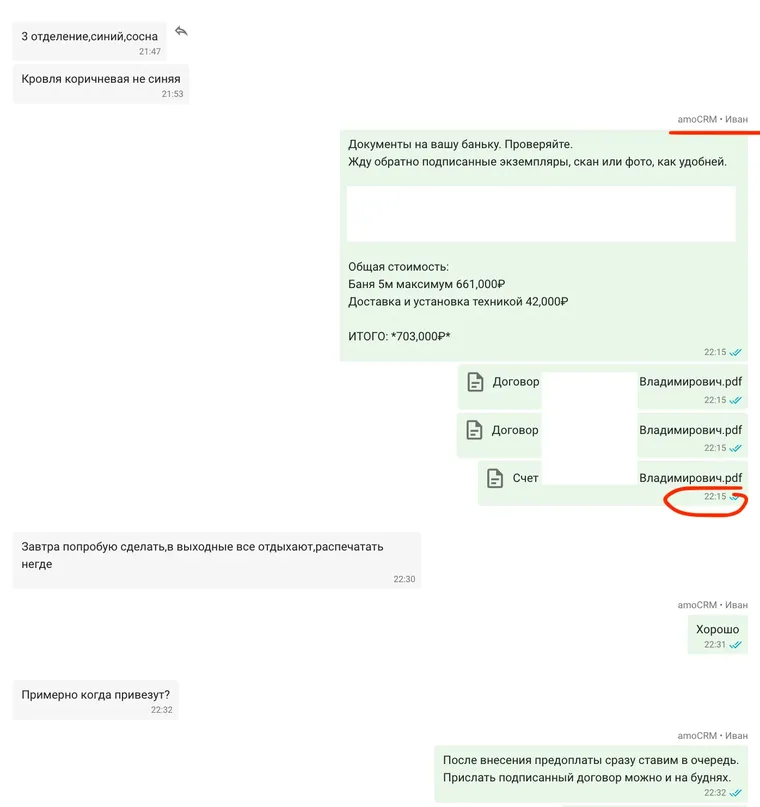
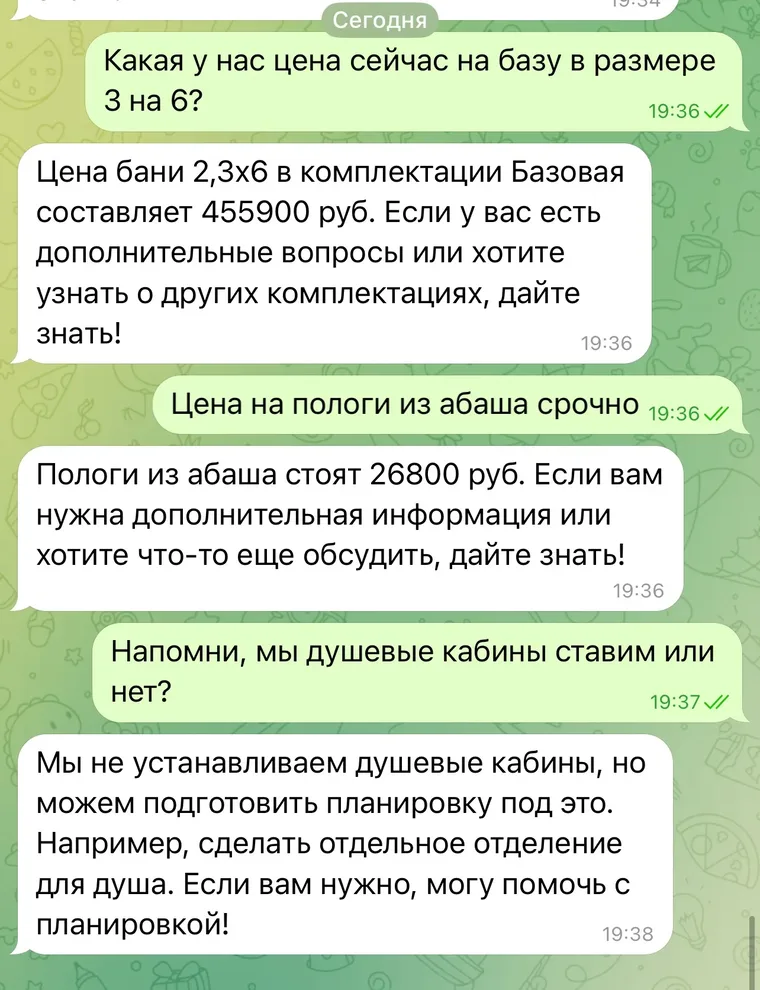
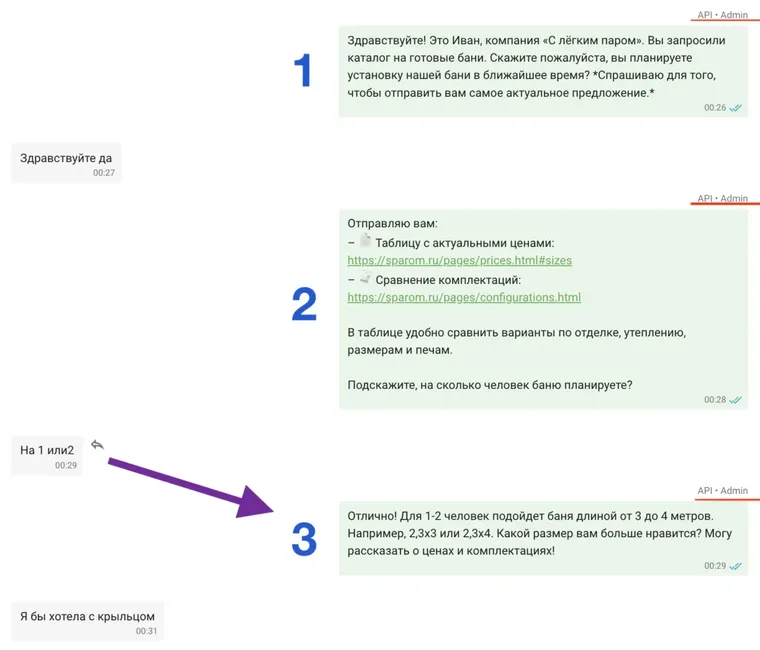
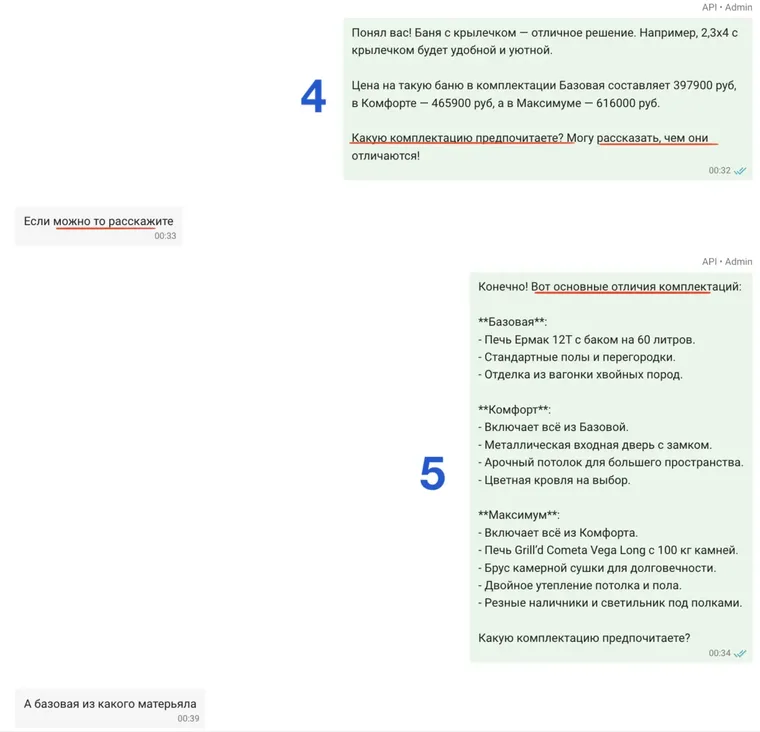
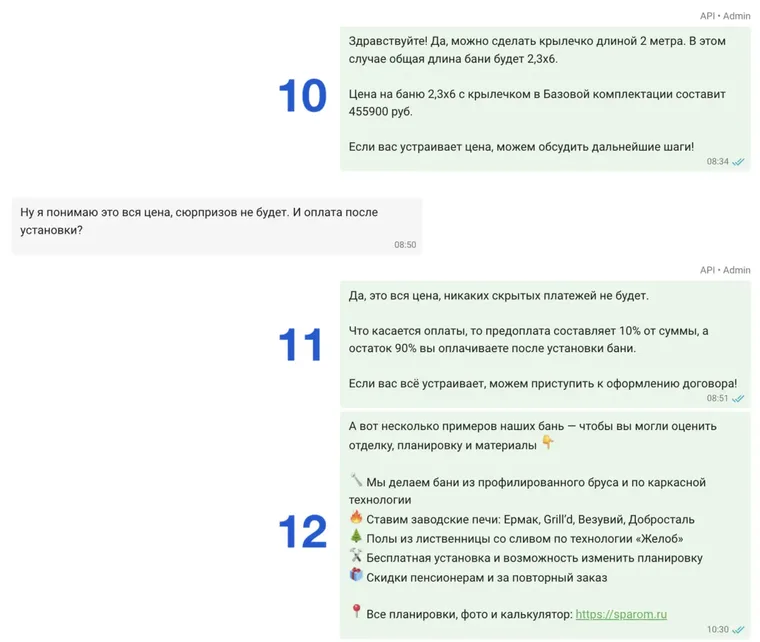
In a sauna factory it prices custom configurations and takes the order.
In your case, I first separate the repeatable front line from work that needs a manager.
Different jobs need different tools. A button-based builder is good for a predictable flow. A GPT prototype can be enough for low volume. DZAMO is for the point where conversations also need CRM data, files, failure monitoring and a clean handoff to a manager. I build and run the system myself, drawing on 12 years in my own businesses and working deployments in construction, design and fit-out. Compare the three approaches →
Examples of what gets custom-built during setup
amoCRM and Bitrix24 are proven in live deployments. For another CRM, I first check its API, write permissions and your current pipeline. We agree the integration scope before development.
A client leaves a request on the website. The system writes first within seconds, while the interest is hot, and develops the conversation.
I connect the sources the system actually needs and agree access permissions with you. In live cases it uses price lists, instructions, PDFs and images without copying the entire knowledge base into a separate dashboard.
Client conversations run in WhatsApp through the official API or Wazzup24. A website form can start the first message; Telegram is used for team workflows and alerts. I assess other channels before promising an integration.
The agent in the website form asks the client for a phone number and writes to them on WhatsApp itself, continuing the conversation without losing context.
If an inbound conversation stalls, the system can send an agreed reminder with the relevant context. This is a targeted follow-up to an enquiry, not a campaign to an old contact list.
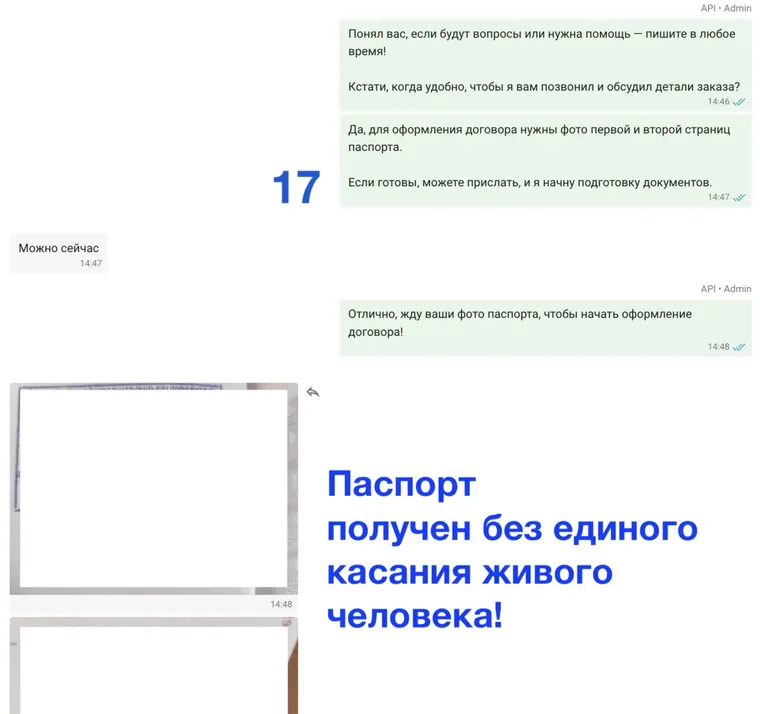
The client sends a file or photo. The system reads it and replies in the context of the project and the next step.
When a conversation is handed to a human, Telegram gets a summary and the latest messages, plus a speed measure: "manager replied in an hour". You see the real state of things without opening the CRM.
For every new client, a card drops into Telegram: who they are, where they came from and what they want.
They answer inbound enquiries 24/7 using agreed materials and rules. A tricky question or a risky conversation is handed to a human with a full summary.
I personally own the quality of every project: I review conversations, ship fixes same-day and evolve the system around your goals.
The AI works in your channels and your CRM. Every conversation is in front of you, nothing is hidden. Reports and metrics are built around your business.
156,000 lines of Python, including 64,000 lines of tests. 997 commits. This is a large product system that we develop on live sales.
It answers only from your knowledge base. Every message is additionally checked by an AI supervisor.
Every conversation is visible in real time. A manager can step into any chat at any moment: for the client it's the same conversation.
I integrate with Bitrix24 and amoCRM. No need to change your processes: the system adapts to yours.
I configure the system around your tone of voice, product and audience. We test real scenarios and define when a manager must step in.
If an inbound conversation stalls, the system sends an agreed reminder. It does not run campaigns to an old contact list.
The report shows how many enquiries were handled, where a manager stepped in and which answers need improvement.
I regularly add answers to new objections straight from your conversations.
The market is full of AI bots with identical messages. I build the system for one specific business, tune it and evolve it continuously. The process is measurable and managed.
A manager with taxes and turnover can cost $20–35K a year. DZAMO starts at $12K a year after setup, but it does not replace a negotiator: it runs the front line and hands a prepared conversation to a person.
Manages people and the pipeline, handles complex deals, owns the target and coaches the team. An AI sales agent should not be assigned these responsibilities.
Runs the front line 24/7: answers from the knowledge base, qualifies the enquiry and hands it to a manager. I regularly review errors, add answers and adjust the tone.
Product knowledge and rules stay in the system. Responsibility for negotiation and the deal stays with the team.
Product knowledge stays in the system. Negotiation and responsibility for the deal stay with people.
Do not judge the system by the word “bot”. Check where it gets facts, how it hands a conversation to a person and what happens when it is uncertain. DZAMO is configured on your materials and real conversations. The case studies show answers based on price lists and documents, plus handoff to a manager.
Every message is checked by an AI supervisor. In tricky situations the system calls in a human manager. You see every conversation in real time.
The system prepares the client for the call. It greets the lead instantly, including at night, clarifies the request and budget, agrees on a time and creates a CRM task. The manager receives a summary and calls at the agreed time.
AI runs the front line while managers focus on deals, so the same team can handle more leads. You decide how to use that capacity. In my own business one manager replaced a larger team, and monthly orders grew by 30%.
There is no free trial: the system is built for your business from scratch, and that's substantial work. The risk is removed differently. Before the deal I show you a live system on a call: real conversations, a real CRM. After setup comes launch and calibration on your actual leads: you see every dialog and every metric. And the subscription starts only once the system is live and working.
You keep ownership of your knowledge base, conversations, clients, CRM and channels. DZAMO operates as the platform connected to them.
14 days from contract to a working system: technical setup, configuration for your business, calibration on real leads. On your side: access and information about your product.
Access to your CRM, product materials and the chosen WhatsApp connection: the official WhatsApp Business API or Wazzup24. We agree the exact permissions before work starts.
Yes. I connect WhatsApp through the official WhatsApp Business API or Wazzup24. Telegram is used for team workflows and alerts. I assess other channels before promising an integration.
During setup you see every conversation and every metric. The system is transparent from day one.